Elena Hoffmann · 6 October 2026
The Evolution of Version Control Systems in Purpose-Built Note Applications for Team Collaboration
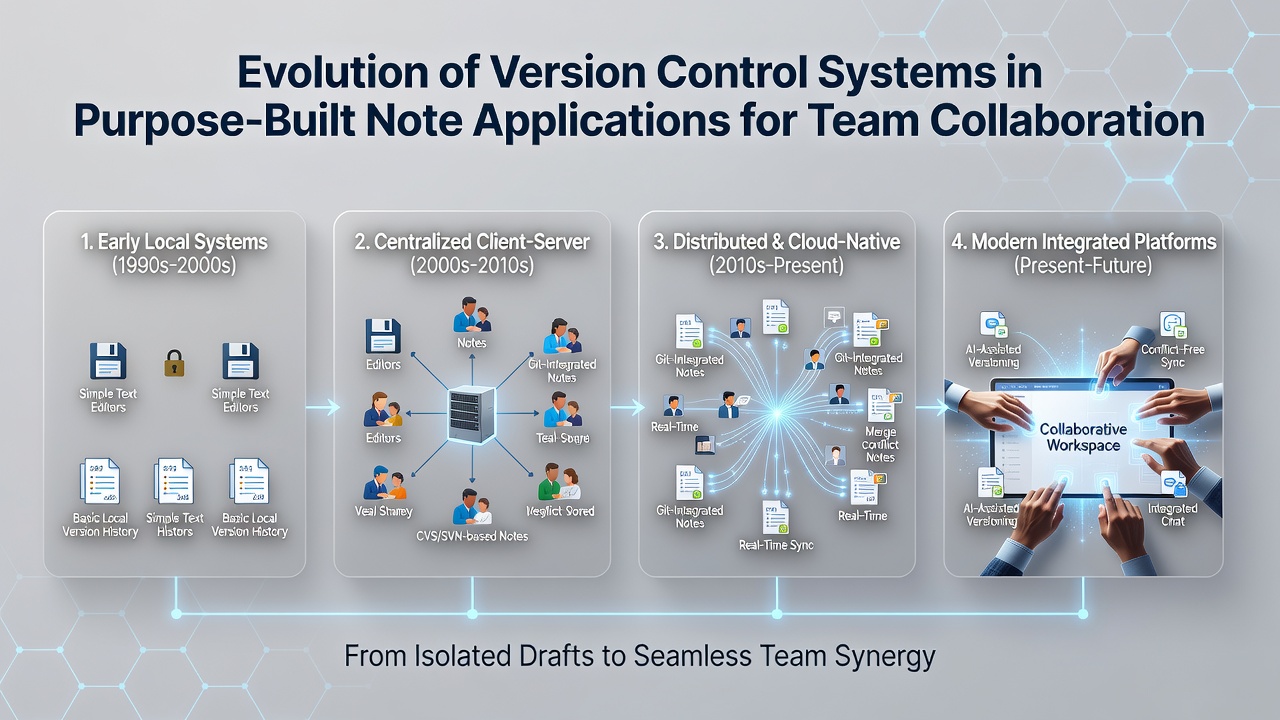
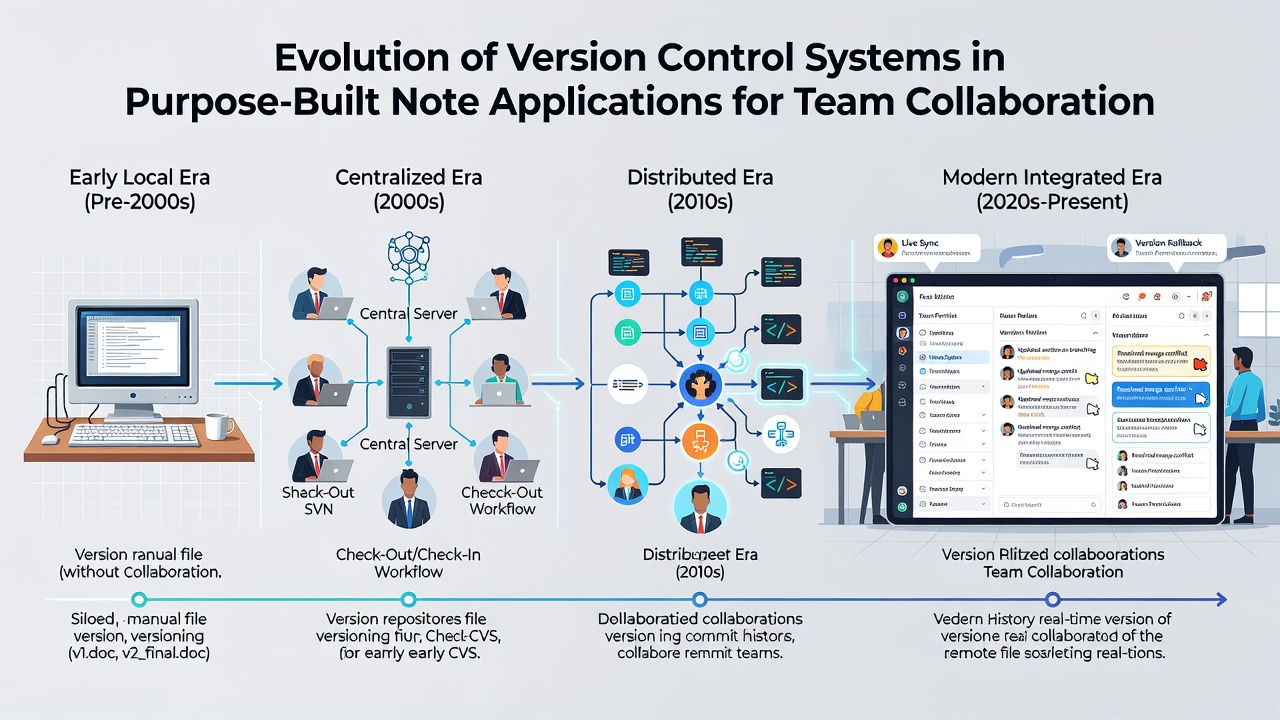
Version control systems have transformed how teams manage shared notes in specialized applications, moving from simple timestamp logs to sophisticated branching mechanisms that mirror software development workflows. Early note platforms relied on basic overwrite protections while modern tools integrate granular history tracking that allows simultaneous edits without data loss. Researchers discovered these shifts accelerated after 2015 when distributed teams demanded real-time synchronization across devices.
Initial Stages of Version Tracking in Note Tools
Basic note applications from the 2000s recorded changes through manual saves and dated backups, yet users often encountered conflicts during group edits. Data from industry reports indicate that platforms introduced automated snapshots by the early 2010s, which reduced overwrite incidents by up to 40 percent according to productivity studies. Observers note that purpose-built systems began embedding revision histories directly into the interface rather than relying on external file copies.
And yet these early features remained linear, offering little support for parallel contributions. Teams working on project documentation found it difficult to explore alternative ideas without duplicating entire note sets. Studies found that organizations in North America adopted shared folders with access logs first, while European firms experimented with embedded comment threads that served as informal version markers.
Integration of Advanced Branching and Merge Capabilities
Purpose-built note applications started incorporating git-inspired branching around 2018, allowing contributors to create isolated draft versions before merging changes back into the main document. This approach preserved original content while enabling experimentation. Figures reveal adoption rates climbed steadily as remote work expanded, with one Canadian research institute reporting a 65 percent increase in collaborative note usage by 2022.
What's interesting is how these systems handle conflict resolution through automated suggestions based on edit proximity rather than simple last-write-wins rules. Experts have observed that applications now display visual diff views similar to code repositories, highlighting insertions, deletions, and structural rearrangements. Teams in Australia documented faster project cycles after switching to platforms that support labeled branches for different phases such as research, drafting, and review.
Current Developments as of October 2026
By October 2026 specialized note platforms routinely embed AI-assisted merge tools that predict user intent and suggest resolutions for overlapping edits. Data shows these features cut manual reconciliation time in half for distributed groups handling complex research notes. Government agencies in the European Union have referenced such capabilities in guidelines for secure knowledge management within public sector teams.
Yet challenges persist around storage overhead when maintaining extensive version trees across large organizations. Industry organizations tracking software trends report that companies now allocate dedicated cloud resources specifically for note history retention, often exceeding initial projections by 30 percent. People who've implemented these systems discover that selective pruning of old branches becomes essential to maintain performance without sacrificing audit trails.
Practical Applications Across Sectors
Take research teams at universities who use branching to separate experimental data notes from final synthesis documents, then merge validated findings back into a central repository. This method supports compliance requirements while fostering iterative idea development. Reports from academic sources highlight similar patterns in healthcare documentation where version control prevents unauthorized alterations to patient care protocols.
But here's the thing: integration with external calendars and task managers extends these benefits further, automatically tagging versions with project milestones. Observers note that marketing departments leverage the same tools to track campaign copy iterations across global offices, ensuring brand consistency through controlled merges. The ball remains in the court of platform developers to refine permission models that restrict branch access based on role hierarchies.
Conclusion
Version control evolution in purpose-built note applications continues to align closely with demands for secure, flexible team collaboration. Systems now combine historical tracking with real-time editing and predictive assistance, supported by data from multiple regional studies. Those who've studied adoption patterns recognize that ongoing refinements in merge algorithms and storage management will shape future capabilities without disrupting established workflows.